
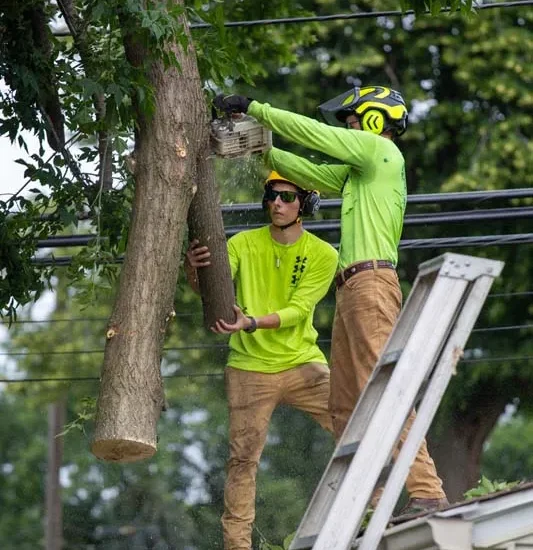
Southeastern Michigan gets a reliable run of thunderstorms from late spring through summer, with straight line winds that do most of the damage, plus ice in winter. Very little of what comes down is a genuine surprise. The warning signs were usually there.
Walk the property in spring
Pick a clear day before the leaves are fully out, when structure is still visible, and look at every tree within reach of the house, garage, driveway and power lines.
What to look for
- Dead limbs, especially large ones over anything you care about. These come down first in wind.
- Hanging limbs already broken and caught in the canopy from a previous storm.
- Splits at forks, particularly narrow V shaped unions with bark pinched inside.
- A new lean, or soil heaving on the opposite side of the trunk from the lean.
- Fungus at the base. Shelf fungus or mushrooms at the root flare signal decay where the tree can least afford it.
- Cavities large enough to reduce the sound wood holding the trunk together.
- Dead ash. Still standing across much of this county, brittle and unpredictable.
What to deal with first
Order the list by what sits underneath. A dead limb over the driveway where the kids’ cars park outranks a dead limb over the back fence. Anything over a bedroom outranks nearly everything.
Reduce, cable or remove
Not everything with a flaw needs to come down. Long, heavy limbs can often be shortened to cut leverage. A single weak union on an otherwise sound tree can be cabled. Trees that are structurally compromised at the trunk, or dead, should come out. An honest assessment will tell you which bucket you are in.
Clear the fence lines too
On acreage around Armada, Richmond and Almont, the fence line is where box elder and scrub growth take over. Those are the limbs that end up across the drive after a storm, and clearing them is quick work compared to what they cost afterward. See brush hogging.
Common Questions
How often should trees near the house be checked?
A walk around each spring catches most problems, plus a look after any severe storm. Trees over the house or driveway deserve closer attention than the back of the property.
Is it worth removing a healthy tree just in case?
Usually not. Healthy, well structured trees are an asset and handle storms well. The trees worth acting on are the dead, decayed and badly formed ones.
What is the single most common cause of storm damage here?
Large deadwood and split unions in mature trees, particularly silver maple, plus dead ash that has been standing for years.
Get a Free Estimate
Spring is the cheapest time to handle this. Storm night is the most expensive. Tip Top Timber Co. is based in Armada and works throughout Macomb County, St. Clair County and the surrounding area. Call (586) 651-5488 or send us a message for a free estimate. If a tree is already down, our 24 hour line is (586) 651-4552.
