
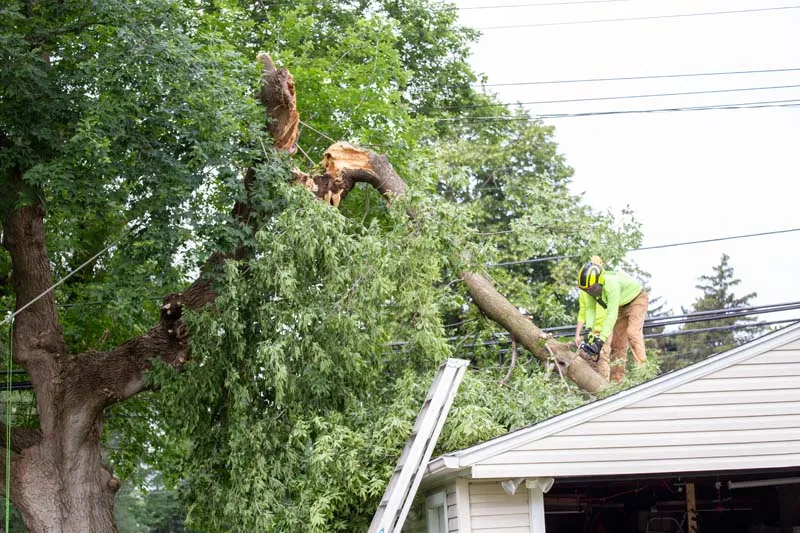
It is a bad morning. A tree is across the roof, or through the garage, and nobody in the house has done this before. Here is the order of operations.
The first ten minutes
- Get everyone out of the rooms under the impact. Ceilings can come down later than the tree did.
- Look for wires. If anything is touching a line, stay back and call the utility first.
- If you smell gas or see sparking, get out of the house and call 911.
- Photograph everything from a safe distance.
- Call a tree service and your insurer. In that order if the house is still taking damage.
Why the tree does not just get pulled off
A tree resting on a roof is holding tension. Parts of it are compressed, parts are stretched, and the whole thing is being held up partly by the building. Cut in the wrong order and the trunk rolls, springs or drops, and the second round of damage is often worse than the first.
The crew works out where the load is before anything gets cut. Sections come off from the top down, often rigged to ropes so each piece is lowered rather than dropped. On bigger trees a crane holds the weight while the cuts are made.
What gets done on the first visit
Making it safe comes first: weight off the structure, hangers out of the canopy, driveway cleared so other trades can get in. Tarping is usually a roofer’s job, but getting the tree off fast is what lets the roofer start.
What comes after
Once the hazard is gone, the rest is ordinary work: cutting up the trunk, chipping brush, raking out, and grinding the stump if you want it gone. That can be scheduled normally, which costs less than emergency hours.
Keep the paperwork straight
Keep every photo and every invoice. Ask for the work to be itemized, especially the emergency portion, because adjusters usually want to see the emergency mitigation separated from the cleanup.
Common Questions
Should I tarp the roof myself?
Only if it is safe to do so from the ground, which it usually is not. Getting the tree off is the priority, and a roofer can tarp properly once the weight is gone.
How fast can a crew get there?
It depends on the storm. After a widespread event, crews work through calls by severity, with trees on houses and blocked driveways first. Call early rather than waiting to see if it settles.
Is emergency work more expensive?
Yes. Night work, storm conditions and a tree resting on a structure are all more dangerous and more involved than a scheduled removal in daylight.
Get a Free Estimate
If a tree is on your house right now, call the 24 hour line and we will get moving. Tip Top Timber Co. is based in Armada and works throughout Macomb County, St. Clair County and the surrounding area. Call (586) 651-5488 or send us a message for a free estimate. If a tree is already down, our 24 hour line is (586) 651-4552.
